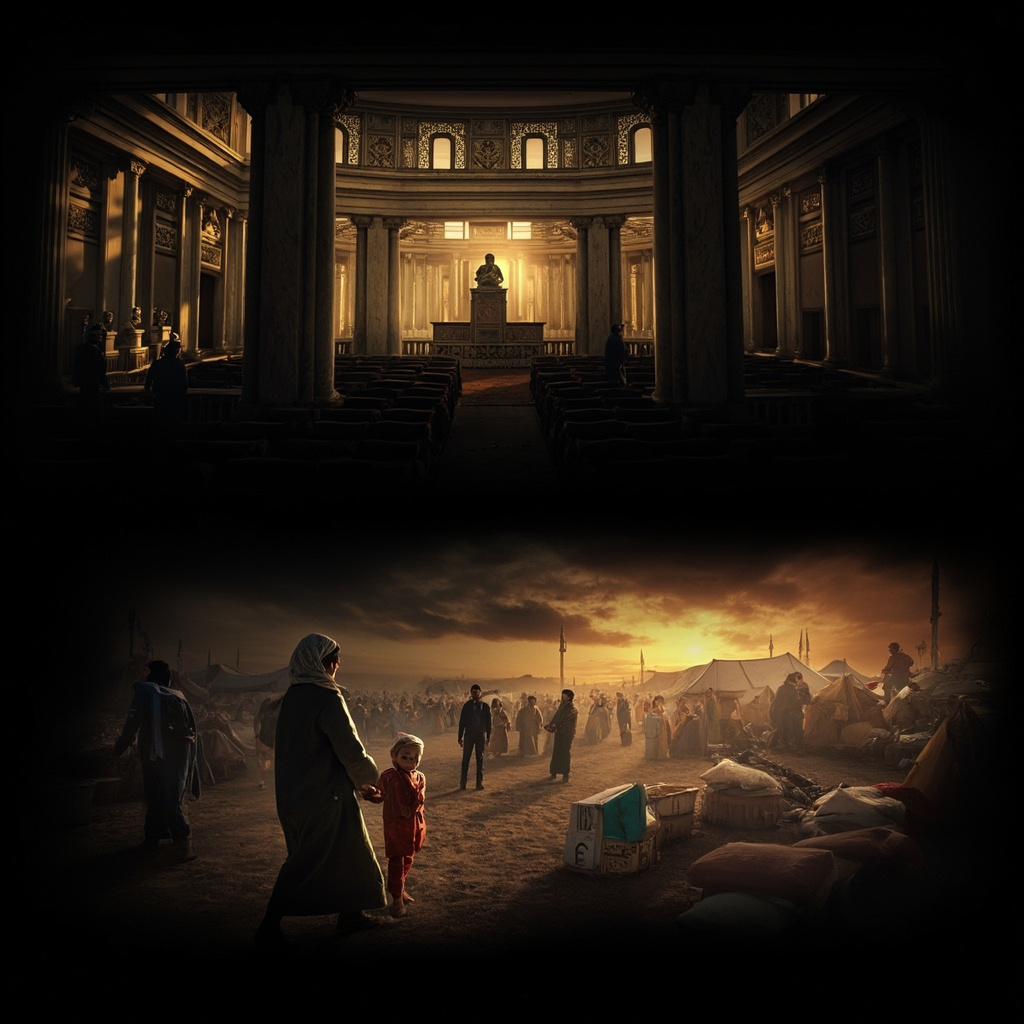
Israel-Hezbollah Ceasefire Violations Continue: Four Killed in Southern Lebanon Airstrike
Despite the ceasefire agreement between Israel and Lebanon mediated by the United States on April 16, violence has continued unabated along the Israel-Lebanon border, with an Israeli airstrike on the southern Lebanon village of Kfar Roummane killing four people on Friday, including two members of Hezbollah's political faction.
The UN Interim Force in Lebanon, UNIFIL, immediately condemned the attack, calling it a "clear and serious violation" of the ceasefire agreement signed just nine days earlier. UNIFIL Force Commander Major General Arturo Garcia said the peacekeepers had documented the strike and would be forwarding their findings to the UN Security Council.
The Israeli military said the strike targeted a "Hezbollah weapons storage facility" adjacent to a civilian structure, and denied that any of the casualties were Hezbollah combatants, calling the militia's claim that two of the dead were political faction members "a transparent attempt to score propaganda points." The Israeli statement said the target was legitimately military and that precautions had been taken to minimize civilian harm.
Hezbollah responded within hours with a barrage of 14 rockets into northern Israel, stating the attack was "retaliation for the massacre in Kfar Roummane." The rockets triggered air raid sirens across the Galilee panhandle and sent residents in the border town of Kiryat Shmona fleeing to bomb shelters, though the IDF said most rockets were intercepted by Iron Dome defense systems and no casualties were reported on the Israeli side.
The exchange has raised fears that the Lebanon ceasefire — itself a component of the broader Iran-Israel arrangement — could collapse entirely, potentially drawing Iran directly back into hostilities in what would be a dramatic and dangerous expansion of the four-month conflict.
Israeli military officials said they are "prepared to resume full operations in Lebanon if required" but remain committed to the ceasefire "as long as Hezbollah respects it." The statement appeared designed to signal that Israel considers itself released from its obligations if Hezbollah continues what Tel Aviv defines as provocations, a position rejected by Hezbollah and its Iranian backers.
The UN Security Council was called into emergency closed-door session late Friday at the request of Lebanon and Iran. Secretary-General Antonio Guterres issued a statement urging "maximum restraint" from all parties and warning that the ceasefire architecture "is under severe stress and must not be allowed to collapse."
Humanitarian conditions in southern Lebanon have deteriorated sharply since the latest exchange. Local officials in Tyre and Sidon reported that at least 12 villages in the border area have been largely abandoned following the Friday strike, with families fleeing toward the coastal cities. The ICRC said it was "deeply concerned" about the safety of civilians caught between the two sides.
Washington's special envoy for Lebanon, who brokered the original April 16 ceasefire, held separate calls with both Israeli and Lebanese officials Friday evening in an attempt to de-escalate. State Department spokesperson Tammy Bruce said the US was "working urgently to preserve the ceasefire" but declined to say whether any specific pressure had been applied to either side.
Regional analysts warn that the ceasefire was always more of a tactical pause than a genuine peace. "Both sides needed a breather," said Lama Abu Baker, a Beirut-based analyst with the Crisis Group. "But neither side has fundamentally changed its calculation about the other, and it was always going to take very little to push things back to the brink."
To be configured
📺 Related Coverage
Related Articles